
Westpac
Westpac Wonder was conceived to rethink the entire home ownership journey — not selling product, but the life goal of owning a home. The first version launched and wasn’t getting traction. The project had become too large and bloated to be effective. At the end of PI02, the headcount was downsized from 125 to 22 high-performing people. That’s when I arrived.
Our job: figure out the pain points and increase form completion. We had 12 weeks. I was the sole UX Designer, and alongside Brad Smith — the best visual designer I’ve ever worked with — we set about understanding why so many people weren’t completing the journey. The completion rate at the time was 1.67%. For every 100 people who started the Approval in Principle form, fewer than 2 finished.
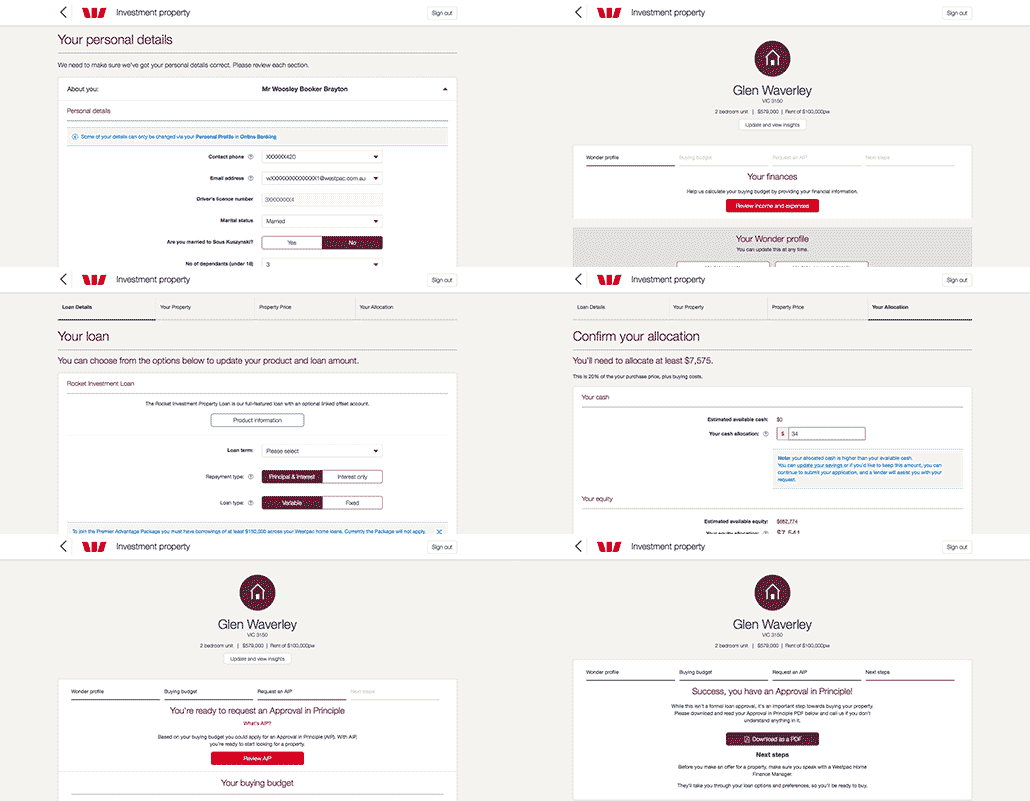
The existing flow used a ‘hub and spoke’ model — complete a section, return to a central page, continue to the next. Page analytics told us the story immediately: users weren’t going past the first return to the hub. Sharp drop-off from section two onwards.
User testing confirmed why. People had no sense of how far through they were, no indication of progress, and a feeling of disorientation. The word that kept coming up was ‘reward’ — they needed to feel like the effort was leading somewhere tangible. A home loan is the most significant financial decision most people will ever make. If the form makes them feel lost, they leave.
With 12 weeks, quick wins were the order of the day. We analysed what needed to be asked, in what order, and mapped the dependencies — in a home loan application, whether you’re married affects shared living expenses, which affects how many fields appear.
We ran workshops with subject matter experts to define the critical path, keeping the content of the original page blocks largely as-is while transforming the overall IA. Then I built a full high-fidelity HTML prototype and we usability tested it in regular two-week increments, refining order, context and copy along the way.
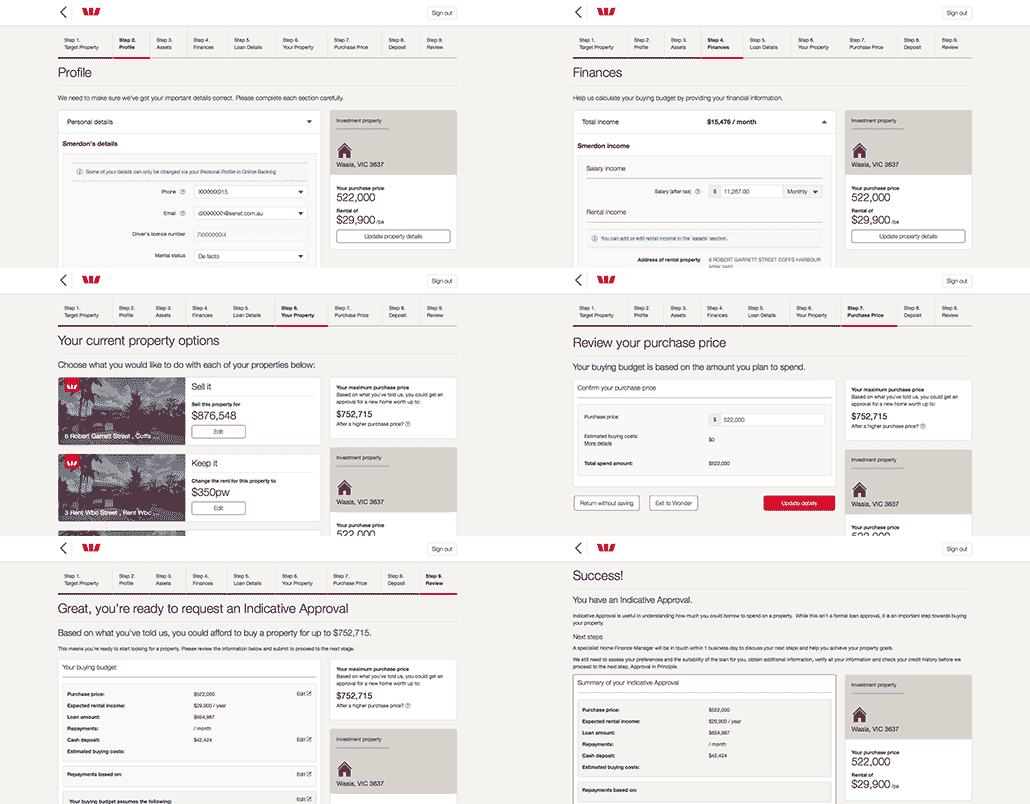
We distilled the 17-page journey into 9 targeted pages with a progress bar prominently at the top that also served as navigation. Hub and spoke became a true linear model. We added supporting information where it was needed, removed jargon, and stripped unnecessary clutter from the interface.
“I feel so much more comfortable completing this form. I know where I am every step of the way.”
“It feels like I am in control of my destiny. No bank jargon there to make me feel like I don’t know what I’m doing.”
Completion went from 1.67% to 9.25%. Successful Approval in Principle applications increased by 290% — so much so that they needed to increase the size of the customer service centre to handle the extra load. Average time to complete the form decreased by over half.
Westpac Wonder is still active today in almost exactly the same structure as when I completed my work on the project.
Users need to know where they are, how far they’ve come, and that the effort is leading somewhere. A progress bar isn’t just a UI pattern — it’s a promise. Combine that with an HTML prototyping approach that lets you test with real users in two-week cycles, and you can transform a 1.67% form into a 9.25% form in 12 weeks.

“Alan is a self proclaimed ‘unicorn’ and he lives up to the title. I’ve worked with him to create new home loan experience for our customers, build awesome prototypes and rapidly code go to market experiences for our customers all while meeting and exceeding the high standards of the bank.”
I'm open to senior product design opportunities with organisations who care about craft, impact, and doing things properly. If that sounds like you, I'd love to chat.